.png)
.png)
No Australian arms in atrocities: Strengthening export controls to prevent complicity in international crimes

Rayana Ajam, Global Voices Fellow, United Nations General Assembly Sixth Committee
Executive Summary
Amid a turbulent global security environment characterised by widespread international crimes, there is a credible risk that Australian-supplied arms and components may be used unlawfully. This undermines the international rules-based order Australia seeks to uphold and exposes it to the risk of complicity in genocide, war crimes and crimes against humanity. Despite clear international obligations, the current framework remains inadequate.
Key gaps include the breadth of the Minister for Defence’s discretionary powers and the absence of independent parliamentary oversight of arms exports. Licence-free trade arrangements facilitate the transfer of arms through third-country channels, obscuring the identity of end-users. The lack of transparency around heightens the risk of diversion, allowing Australian-origin arms and components to reach actors implicated in serious human rights violations without Government knowledge or consent.
Australia should implement a comprehensive end-use verification regime aligned with best practice under the Wassenaar Arrangement, as reflected in systems adopted by the United States and Norway. This should include legally binding End-User Certificates and robust post-shipment monitoring to prevent diversion to unauthorised end-users. These measures should be supported by targeted ministerial prohibition powers to block exports where there is a reasonable risk of transfer to high-risk destinations.
Without reform, Australia will remain out of step with international best practice in arms export controls. While enhanced safeguards may entail operational and diplomatic challenges, the legal, reputational and ethical consequences of inaction are far greater. A rigorous end-use verification framework is essential to ensure Australia’s participation in the global arms trade is lawful, transparent and consistent with its international obligations.
Problem Identification
The Commonwealth’s defence export controls framework fails to prevent the use Australian arms and components from contributing to grave international crimes. Despite signing the Arms Trade Treaty (ATT) in 2013, Australia’s compliance is undermined by broad ministerial discretion in permit approvals, limited export data transparency, the absence of rigorous human rights risk assessments and a formal end-use verification system (Varrall, 2025). This reflects weak ratification of the ATT and obligations under International Humanitarian Law (IHL), with formal commitments not translating into effective domestic controls.
The significant volume of Australian arms exports to actors accused of genocide, war crimes, and crimes against humanity raises grave concerns regarding compliance and complicity. Between 2019 and 2023, Australia ranked 16th among the world’s top 20 arms exporters (Sanders & Garrow, 2023; Wezeman et al., 2024). Notably, 322 export permits have been granted to Israel since 2017, including 35 in the 2023-24 period, amid ongoing allegations of genocide (Hurst, 2023; Foreign Affairs, Defence and Trade Legislation Committee, 2024). Licence-free trade environments and strategic partnerships like AUKUS facilitate complex third-country channels that obscure the final destination of exports, reflected by limited transparency and undermining national accountability (Greene, 2024; ACIJ, 2025).
Left unaddressed, these gaps risk violations of ATT Articles 3–4 and 6–7, while eroding Australia’s credibility as a proponent of the international rules-based order and setting a dangerous precedent for global arms trade controls.
Strengthening export controls is therefore a national security imperative; verification will mitigate legal and reputational risks while reinforcing Australia’s genuine commitment to global disarmament and humanitarian norms (Sanders, 2024).
Context
Australia's International Obligations
The Arms Trade Treaty
The ATT, which entered into force in 2014 with Australia’s drafting involvement, sets international standards for regulating the conventional arms trade (Minister for Foreign Affairs, 2014; Woolcott, 2014). Its primary objectives are to reduce human suffering and promote responsible state practice to maintain international and regional peace and security (ATT, 2013, art. 1).
Under the ATT, Australia is bound by clear obligations:
Articles 3–5 require the establishment and maintenance of national control systems and comprehensive control lists covering the broadest range of conventional arms and components.
Articles 6–7 prohibit export authorisations if the state has knowledge that items would be used to commit genocide, crimes against humanity, or war crimes. Denial of exports is mandated where risk of serious violations of IHL or human rights law exists.
The Wassenaar Arrangement
Australia’s arms export controls are further guided by the Wassenaar Arrangement (WA), a multilateral regime of 42 participating states that governs conventional arms and dual-use goods and technologies (Department of Defence, 2025). The WA establishes common control lists and requires members to prevent unauthorised transfers and re-transfers to unintended users (WA, n.d.).
The WA promotes transparency practices, requiring participating states to exchange information and report arms transfers and denials biannually. It also promotes end-user and end-use verification to strengthen accountability beyond initial export approval, approaches already adopted by states such as the United States and Norway (WA, 2014).
History of Australia's arm supply to states accused of grave international crimes
Despite being a signatory to the ATT and a participating state in the WA, there is substantial evidence that Australian arms and components have been supplied to states accused of committing grave international crimes.
Israel
The International Court of Justice (2024) ruled it plausible that Israel’s conduct in Gaza could violate the Genocide Convention. Subsequently, the Office of the High Commissioner for Human Rights and independent UN human rights experts (2024) had called on states to suspend arms transfers to prevent complicity in genocide. The UN Commission of Inquiry on the Occupied Palestinian Territory (2025) also concluded that acts of genocide have been committed against Palestinians in Gaza by Israel.
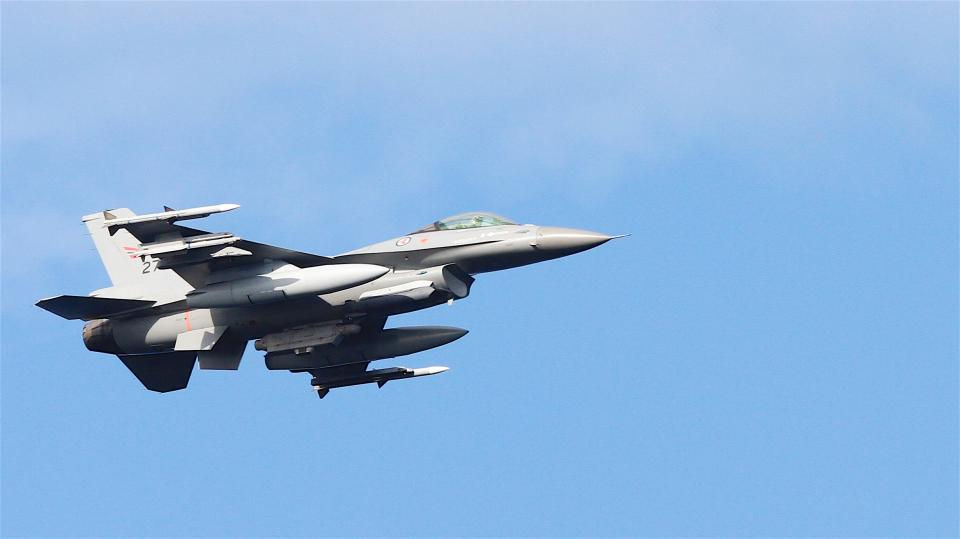
Australia is the sole supplier of certain components for Lockheed Martin’s F-35 jets, which are present in every F-35 globally (Amnesty International Australia, 2024; MC, 2024). While the Department of Defence has stated that F-35 components are exported to a United States “central repository,” reporting indicates up to 68 direct shipments to Israel between October 2023 and September 2025 (Cronau, 2025). DFAT records confirm $10 million in arms exports to Israel from 2019–2023, with 59 active export permits as of early 2025 (DFAT, 2025; Department of Defence, 2025; Basford Canales, 2024).
By excluding components from its definition of “weapons and ammunition,” the Government appears to exploit a loophole (Morrison, 2025, p. 12). This interpretation bypasses ATT obligations, which explicitly prohibit the transfer of components that risk facilitating violations of IHL. This not only risks Australian complicity in serious human rights abuses but breach of its international legal obligations.
Saudi Arabia and the United Arab Emirates (UAE)
Saudi Arabia and the UAE have been central actors in the Yemen conflict, accused of war crimes that have caused widespread civilian casualties and a severe humanitarian crisis (Coates-Ulrichsen, 2017; Esmaeili & Lock-Weir, 2024). Following a 2020 UN Human Rights Council report highlighting state-facilitated abuses, the US and EU suspended arms sales, yet Australia continued exports (OHCHR, 2020; Doherty, 2019). Amnesty International Australia (2019) reported that Australian-supplied arms to the UAE risk diversion to militias committing war crimes, including armoured vehicles, mortars, and machine guns. The ABC (2019) revealed Canberra-based Electro-Optic Systems supplied remote weapons systems directly to both Saudi Arabia and the UAE.
Third-country transfers
Sudan has experienced protracted conflict between the Sudanese Armed Forces and the Rapid Support Forces (RSF), involving widespread atrocities, with the UN Security Council imposing an arms embargo on Darfur (Motamedi, 2025). While direct exports to Sudan are tightly controlled and sanctioned within Australian domestic law, indirect supply via the UAE remains a concern (DFAT, 2025; Belot & Doherty, 2025). Australia has exported significant arms and ammunition to the UAE, and UN expert panels report cargo rotations from the UAE carrying weapons to the RSF, creating a high-risk of diversion, resulting in potential complicity in war crimes– a concern raised by parliamentarians and human rights groups (UNSC, 2024; Amnesty International Australia, 2024). The indirect supply risk is compounded by licence-free trade arrangements under partnerships like AUKUS, which allow arms transfers without Ministerial approval. Reliance on third-party pathways poses significant challenges to ensuring compliance with international law.
Analysis of current policy landscape
Legislative framewrok and permit system
Arms exports are regulated by the Defence Export Controls (DEC) unit under the Defence Trade Controls Act 2012, the Customs Act 1901 and respective regulations, using a permit system for items listed on the Defence and Strategic Goods List (DSGL). This covers both military and dual-use items (Department of Defence, 2025). The Minister for Defence considers 12 criteria when granting permits, yet only two of these criteria address international law and human rights obligations (Reg. 13E, Customs (Prohibited Exports) Regulations 1958). The decision-making process is opaque, with no public guidance on how the criteria are applied (Sanders, 2024; Morrison & Quakers, 2025). Australia also lacks a mandatory end-use verification system aligned with ATT and WA standards, which severely limits the Government’s ability to trace exports (Alexa et al., 2020).
Exempt foreign entities and licence-free trade
The permit system applies only to non-exempt foreign entities. Exemptions, including AUKUS partners and 15 listed countries under Regulation 13EA of the Customs (Prohibited Exports) Regulations 1958 (‘CPER’), create licence-free trade environments. While these arrangements exist for strategic trade purposes, they facilitate third-country pathways and increase the risk of diversion to countries accused of grave international crimes. Absence of a mandatory Australian end-use verification increases this risk (Department of Defence, 2025).
AUKUS, logistically formalised under the Defence Trade Controls Amendment Act 2024, has drawn international criticism for undermining compliance with the ATT and broader non-proliferation obligations (UNGA First Committee, 2025).
Ministerial power
The Minister for Defence has broad discretion to grant permits but limited statutory authority to deny or revoke them on the basis of potential violations of international law. Section 112BA of the Customs Act 1901 allows export prohibition only when military end-use could prejudice Australia’s security, defence, or international relations. However, decisions can be challenged internally, via the Administrative Appeals Tribunal, or through judicial review.
Arms export reporting
External export oversight is hindered by the lack of verifiable data. The Australian National Audit Office (2020) found that actual exports are not monitored after permits are issued, as there is currently no statutory requirement to do so, despite this being an obligation under the ATT (art. 12). Australian Defence Exports Office and DFAT report permits issued, but data does not capture actual exports or differentiate between full platforms, subsystems, or components, including F-35 supply chains (Tesch & Samuel, 2023). This limits transparency and scrutiny of end-use.
Case Studies
Norway
Norway provides a model for ATT compliance through statutory risk assessments and mandatory end-use verification. All military exports require a binding End-User Certificate (EUC) (see Appendix A), specifying purpose, end-user, and intended location, while strictly prohibiting re-export without Norwegian consent (Norwegian Ministry for Foreign Affairs (‘MFA’), 2020).
Furthermore, MFA guidelines mandate permit refusal if an export risks violating international obligations or facilitating internal repression, human rights abuses, or IHL violations. This transparent, rule-based framework contrasts with Australia’s discretionary and opaque system.
United States
The Arms Export Control Act (AECA) mandates an End‑Use Monitoring (EUM) program for all defence exports (22 U.S.C. § 2785, 2011). Recipients must provide reasonable assurance that they comply with US Government requirements regarding the security, authorised use, and transfer of items, explicitly prohibiting unauthorised third-country transfers and requirements for annual reporting to Congress (22 U.S.C. § 2752(d); see Appendix B).
Prior to any export, foreign entities must formally agree to core conditions, including non-transfer assurances that equipment will not be retransferred to third parties without US Government approval, and that uses conform to international law obligations and transfer arrangements (US Department of State, 2025).
Compliance is actively verified by the US embassy and consulate staff through End-Use Checks, which include on-site visits, certificate reviews, and investigations into suspected violations (US Department of Commerce, 2024). New Zealand
New Zealand’s Ministry of Foreign Affairs and Trade (‘MFAT’) administers defence exports under the Customs and Excise Act 2018. Using a six-point Export Controls Regime Assessment Criteria, MFAT evaluates all permit applications against ATT and other international obligations (NZ MFAT, n.d.; see Appendix C). This comprehensive framework provides a clear legal basis to deny, revoke, or cancel permits if an export risks undermining domestic policy or international law.
Policy Options
A key measure of success is verifiable assurance that Australian arms and components are not supplied to end-users accused of grave international crimes. Quantitative indicators of success would reflect reduced approval rates for export permits to actors accused of or implicated in genocide, war crimes and crimes against humanity, and demonstration that Australian defence exports do not reach such actors, including through third-country pathways.
Option 1: Independent Arms Export Controls Committee
This option would amend CPER to establish an Independent Arms Export Controls Committee, modelled on the United Kingdom’s Committee on Arms Export Controls. By providing cross-parliamentary oversight, the Committee would decentralise the Minister’s discretionary power and enhance scrutiny of executive decisions (UK ECJU et al., 2023). It would independently review permit applications against ATT, IHL, and human rights obligations, specifically assessing an end-user’s record, diversion risks, and potential to facilitate international crimes (UK Parliament Committees, n.d.; UK ECJU, 2023).
The Committee would advise the Minister, recommend permit refusals based on legal or humanitarian risks, and mandate public reporting on decisions (Kirk‑Wade, 2025). Implementation is estimated to cost $5–15 million AUD annually for operations and staffing, funded by the Department of Parliamentary Services and managed jointly by DFAT, Attorney-General’s Department (AGD), and Defence (Committees on Arms Export Controls, 2014). While this significantly strengthens transparency, it does not, in isolation, eliminate the diversion risks in licence-free trade environments.
Option 2: Mandatory refusals
This option proposes amending Regulation 8 of the Defence Trade Controls Regulations 2013 and Regulation 13EE of CPER to mandate permit refusal where exports risk contributing to genocide, war crimes, or serious human rights and IHL violations. Mirroring New Zealand’s assessment criteria, this shift transforms human rights from discretionary factors into enforceable legal obligations, directly operationalising ATT Articles 6–7 (NZ MFAT, n.d.).
Legislative clarity of this kind improves consistency and limits political discretion in permit approvals (Varrall, 2025). Implementation is cost-effective, estimated at under $1 million AUD, as it utilises existing DEC resources with AGD oversight. However, this reform does not apply to exempt foreign entities or licence-free trade environments, leaving Regulation 13EA of CPER operative and third-country diversion risks unaddressed.
Option 3: End-use verification
This option would amend Section 112BA of the Customs Act 1901 and Regulation 13E of CPER to introduce mandatory end-use verification measures for all defence exports, including those conducted under licence-free trade environments. Drawing on the US’ EUM program and Norway’s measures, exporters would be legally required to obtain binding EUCs prohibiting unauthorised re-transfer, supported by post-shipment verification measures such as audits, intelligence-led monitoring and targeted on-site inspections (US Department of State, 2023; Norwegian MFA, 2020).
The grounds for prohibiting exports under Section 112BA of the Customs Act 1901 would be expanded to include any transfer that risks inconsistency with Australia’s ATT, IHL or human rights obligations, containing civil and criminal penalties for breaches.
This option enables verifiable confirmation that Australian arms and components are not diverted to perpetrators of grave international crimes, including via third-country pathways (Little, 2017). It offers direct accountability for end-use, proactive risk mitigation, strengthened international compliance, and increased deterrence (Mandle & Pearson, 2023). It is, however, resource-intensive, with estimated ongoing costs of $2-3 million AUD per year dedicated to increased staffing for monitoring, verification missions, and intelligence analysis, and risks diplomatic and enforcement challenges (US Department of State, 2019).
Policy Recommendation
Option 3 is the preferred policy option as it offers the most direct, enforceable, and internationally credible mechanism to prevent Australian involvement in international crimes. By replacing discretionary decision-making with measurable compliance and ending supply through third-country pathways, this option effectively eliminates the risk of Australian complicity (Berkol & Moreau, 2009). Globally recognised as the premier tool for preventing diversion, end-use verification is essential to operationalising ATT Articles 6–7 (Domit et al., 2025).
Consistent with WA best practice, EUCs would require detailed disclosures and binding undertakings against re-transfer and violations of international law (WA, 2005). EUC format will be informed by the WA’s ‘Consolidated Indicative List’ of end-user assurances (2005) (see Appendix D).
Legislative amendments are proposed in Appendix E.
Implementation and costs
The Department of Defence and DFAT would lead the implementation of the end-use verification system, with the AGD providing legal oversight regarding ATT and WA obligations.
While the US EUM program costs approximately USD $1.4 million annually (US Department of State, 2019), an Australian system would be less resource-intensive by focusing on targeted, rather than universal, post-shipment checks. Establishment and operational costs are estimated at AUD $2 million per year, a modest figure compared with the AUD $706 million currently lost due to export control gaps (Department of Defence, 2023). Based on US benchmarks, a phased implementation over 5–10 years is a realistic timeframe for a fully operational system (US Department of State, 2024).
Risks
Barriers
A barrier to implementation is the absence of a uniform, transparent national dataset. Current reporting is fragmented; the Department of Defence tracks permits while DFAT and the ABS track actual exports, resulting in vastly divergent figures that undermine policy evaluation and enforcement (Morrison & Quakers, 2024). Without consolidated, verifiable data, the effectiveness of any end-use verification regime remains severely constrained (Bromley et al., 2021).
A second structural challenge is that the DSGL has not explicitly recognised the weaponisation of AI technologies (Osimen et al., 2024). While not directly related to tangible trade, this lag leaves the military risks of AI technologies unaddressed and outside effective control.
Risks
A geopolitical risk is potential friction within licence-free trade environments, particularly under AUKUS. Australia has framed AUKUS as a cornerstone of national security designed to streamline defence trade with the US and UK (Prime Minister’s Office, 2022). Introducing mandatory end-use verification may operate as a constraint on AUKUS, creating tension between diplomatic interests and essential human rights safeguards (Guiberteau-Ricard et al., 2025). However, ATT obligations remain binding regardless of strategic partnerships.
Commercially, stronger end-use obligations may face industry resistance due to increased compliance burdens and uncertainty for major contractors such as Thales Australia and Lockheed Martin (Morrison & Quakers, 2024). However, long-term damage to Australia’s standing in the rules-based order far outweighs these initial commercial adjustments.
Appendix
Appendix A: Norway End-Use Certificate

Appendix B: 22 U.S. Code § 2785 - End-use monitoring of defense articles and defense services
(a) Establishment of monitoring program
(1) In general
In order to improve accountability with respect to defense articles and defense services sold, leased, or exported under this chapter or the Foreign Assistance Act of 1961 (22 U.S.C. 2151 et seq.), the President shall establish a program which provides for the end-use monitoring of such articles and services.
(2) Requirements of program
To the extent practicable, such program—
shall provide for the end-use monitoring of defense articles and defense services in accordance with the standards that apply for identifying high-risk exports for regular end-use verification developed under section 2778(g)(7) of this title (commonly referred to as the “Blue Lantern” program); and
shall be designed to provide reasonable assurance that—
(i) the recipient is complying with the requirements imposed by the United States Government with respect to use, transfers, and security of defense articles and defense services; and
(ii) such articles and services are being used for the purposes for which they are provided.
(b) Conduct of program
In carrying out the program established under subsection (a), the President shall ensure that the program—
provides for the end-use verification of defense articles and defense services that incorporate sensitive technology, defense articles and defense services that are particularly vulnerable to diversion or other misuse, or defense articles or defense services whose diversion or other misuse could have significant consequences; and
prevents the diversion (through reverse engineering or other means) of technology incorporated in defense articles.
(c) Report to Congress
Not later than 6 months after July 21, 1996, and annually thereafter as a part of the annual congressional presentation documents submitted under section 634 of the Foreign Assistance Act of 1961 [22 U.S.C. 2394], the President shall transmit to the Congress a report describing the actions taken to implement this section, including a detailed accounting of the costs and number of personnel associated with the monitoring program and the numbers, range, and findings of end-use monitoring of United States transfers of small arms and light weapons.
(d) Third country transfers
For purposes of this section, defense articles and defense services sold, leased, or exported under this chapter or the Foreign Assistance Act of 1961 (22 U.S.C. 2151 et seq.) includes defense articles and defense services that are transferred to a third country or other third party.
Appendix C: New Zealand's Export Controls Regime Assessment Criteria
Criterion 1: Consistency with New Zealand’s disarmament, arms control and non-proliferation obligations, commitments and policies;
Criterion 2: Consistency with New Zealand’s obligations, commitments and policies regarding fundamental principles of international law, as well as international human rights law and international humanitarian law;
Criterion 3: Consistency with New Zealand’s other international obligations, commitments and policies;
Criterion 4: Whether the export may compromise New Zealand’s national interests including, without limitation: security, international relationships, international reputation and obligations under The Treaty of Waitangi / Te Tiriti o Waitangi;
Criterion 5: The impact the export is expected to have on peace, security and stability;
Criterion 6: Whether the export may undermine confidence in New Zealand’s commitment to being a responsible exporter of strategic and military end-use goods.
Appendix D: End-User Certificate details (as adopted by the Wassenaar Arrangement’s ‘End user assurances commonly used- Consolidated Indicative List’ (2005))
Transaction details:
Parties involved in the transaction.
Exporter's details.
End-user's details.
Goods specification:
Description of the goods (type, characteristics).
Quantity and value of exported goods.
Reference to the contract or order number (if applicable) concluded with the final destination country's authorities.
End-Use purpose:
Indication of the end-use purpose of the goods.
Undertakings:
An undertaking that the goods will not be used for purposes other than the declared end-use.
An undertaking that the goods will not be used in the development, production, or use of chemical, biological, or nuclear weapons, or for missiles capable of delivering such weapons.
An undertaking that the export will not contravene the Commonwealth of Australia's obligations under the Arms Trade Treaty, Geneva Conventions, its protocols, and the Wassenaar Arrangement.
An undertaking that the goods will not be transferred or diverted to any country, entity, or end-user that is, or could reasonably be expected to be involved in the commission of grave international crimes (including genocide, war crimes, and crimes against humanity).
Date and signature of recipient
Appendix E: Proposed Amendments to Customs Act 1901 and Customs (Prohibited Exports) Regulations 1958 (as drafted by author)
Proposed amendment to reg. 13E of CPER:
End-use verification of defence and strategic goods exports – Mandatory end-use certificate
(7) An exporter of defence and strategic goods, including those listed in regulation 13EA, must, before the goods are exported, obtain and retain an end-use certificate for all such goods, regardless of the destination country or recipient.
(a) The end-use certificate must provide reasonable assurance that—
(i) the exportation is not inconsistent with, and does not compromise or risk contravening, Australia’s obligations and commitments arising under the Arms Trade Treaty, the Geneva Conventions and their protocols, and the Wassenaar Arrangement, and any other international agreement Australia has signed in relation to arms trade, particularly in relation to international human rights law and international humanitarian law; and
(ii) the exportation will not result in the transfer or diversion of the goods to a country, entity, or end-user that is accused of, or could reasonably be expected to be involved in, the commission of grave international crimes, including genocide, war crimes, and crimes against humanity.
(b) The requirement in paragraph (a) extends to the exporter obtaining reasonable assurance that any subsequent sale, lease, re-export, or transfer of the goods to a third country or other third party complies with the requirements of subparagraphs (a)(i) and (a)(ii).
“end-user”: any of the following entities that is the final recipient of the defence and strategic goods exported from Australia:
(a) a national government;
(b) national military forces, including reserve, auxiliary, or similar organisations;
(c) national authorities, including, but not limited to, police forces, customs services, or paramilitary forces; or
(d) any other national entity or organisation that is designated as the final user or recipient in the relevant end-use certificate.
Ministerial prohibition notice
(8) If the Minister for Defence or the Minister for Foreign Affairs and Trade considers that an export of defence and strategic goods risks contravening Australia’s obligations as described in subregulation (7) paragraph (a), the Minister may issue a prohibition notice under section 112BA of the Customs Act 1901.
Offence
(9) A person commits an offence if the person is an exporter of defence and strategic goods and exports the goods without complying with subregulation (7) paragraph (a).
Penalty: Imprisonment for 10 years or a reasonable and proportionate civil penalty, or both.
Proposed amendment to s 112BA (1) of Customs Act 1901:
Notice prohibiting export
(1) The Defence Minister or the Foreign Affairs and Trade Minister may give a notice (a prohibition notice) to a person (the exporter) prohibiting the exporter from exporting particular goods to a specified place or a specified person if the Minister suspects that:
(a) the goods would, or may, be for a military end-use that would prejudice the security, defence, or international relations of Australia; or
(b) the export of the goods would, or may, risk contravening the obligations or commitments of Australia set out in paragraph (a) of subregulation (7) of regulation 13E of the Customs (Prohibited Exports) Regulations 1958.
References
Alexa M. Kaufer, T. Theis, & J. L. Gray. (2020). Complying with Defence Export Controls: A working perspective. Microbiology Australia, 41(3), 139–142.
Alwishewa, H. (2025). Human rights due diligence for arms companies: Lessons from supply chain regulations. European Journal of Risk Regulation, 16(2), 704–720. https://doi.org/10.1017/err.2024.83
Amnesty International. (2024, December 5). Amnesty International concludes Israel is committing genocide against Palestinians in Gaza. https://www.amnesty.org/en/latest/news/2024/12/amnesty-international-concludes-israel-is-committing-genocide-against-palestinians-in-gaza/
Amnesty International Australia. (2019, February 6). Australian‑supplied arms fuelling bloody conflict in Yemen. https://www.amnesty.org.au/australian-supplied-arms-fuelling-bloody-conflict-in-yemen/
Amnesty International Australia. (2024, August 15). Analysis of Australian compliance with Arms Trade Treaty. https://www.amnesty.org.au/analysis-of-australian-compliance-with-arms-trade-treaty/
Amnesty International Australia. (2024, July 29). Sudan: Constant flow of arms fuelling relentless civilian suffering in conflict – new investigation. https://www.amnesty.org.au/sudan-constant-flow-of-arms-fuelling-relentless-civilian-suffering/
Australia Palestine Advocacy Network. (2024, June 5). Senator David Shoebridge – Estimates questions to the Department of Defence regarding Australia’s role in the supply chain of the F-35 fighter jet and Israel’s use of that jet in Gaza. https://apan.org.au/auspol/senator-david-shoebridge-estimates-questions-to-the-department-of-defence-regarding-australias-role-in-the-supply-chain-of-the-f-35-fighter-jet-and-israels-use-of-that-jet-in-gaza/
Australian Centre for International Justice. (2025, April 11). Despite Government claims, Australia still exporting lethal arms to Israel. https://acij.org.au/despite-government-claims-australia-still-exporting-lethal-arms-to-israel/
Australian Government, Department of Defence. (2024, October 30). Australia forges ahead on missile & munitions manufacturing [Media release]. https://www.minister.defence.gov.au/media-releases/2024-10-30/australia-forges-ahead-missile-munitions-manufacturing
Australian Government, Department of Defence. (2024, August). Navigating the Defence export controls legislative framework. https://www.defence.gov.au/sites/default/files/2024-08/Navigating-the-Defence-Export-Controls-Legislative-Framework.pdf
Australian Government, Department of Defence. (2025). Export controls framework. https://www.defence.gov.au/business-industry/exporting/export-controls-framework
Australian Government, Department of Defence. (2025). Export permit statistics. https://www.defence.gov.au/about/accessing-information/export-permit-statistics
Australian Government, Department of Defence. (2025). International obligations (Export controls framework). https://www.defence.gov.au/business-industry/exporting/export-controls-framework/international-obligations
Australian Government, Department of Defence. (2025). Licence‑free environment (Exporting). https://www.defence.gov.au/business-industry/exporting/applications-pre-notifications/licence-free-environment
Australian Government, Department of Foreign Affairs and Trade. (2014, December 2). Australia ratifies Arms Trade Treaty [Media release]. https://www.foreignminister.gov.au/minister/julie-bishop/media-release/australia-ratifies-arms-trade-treaty
Australian Government, Department of Foreign Affairs and Trade. (2025). Sudan and South Sudan sanctions frameworks. https://www.dfat.gov.au/international-relations/security/sanctions/sanctions-regimes/sudan-and-south-sudan-sanctions-framework
Australian Government, Department of Foreign Affairs and Trade. (2025). Trade statistical pivot tables. https://www.dfat.gov.au/trade/trade-and-investment-data-information-and-publications/trade-statistics/trade-statistical-pivot-tables
Australian National Audit Office. (2020, September 10). Design and implementation of the Defence Export Strategy (Auditor‑General Report No. 6 of 2020–21). https://www.anao.gov.au/work/performance-audit/design-and-implementation-the-defence-export-strategy
Belot, H., & Doherty, B. (2025, November 16). Australia is selling arms at a weapons fair in Dubai. Are they destined to be used in Sudan atrocities? The Guardian. https://www.theguardian.com/australia-news/2025/nov/16/australia-dubai-international-airshow-defence-weapons-arms-fair-sudan-uae
Basford Canales, S. (2024, November 12). Australia amends or ends 16 defence export permits to Israel amid review. The Guardian. https://www.theguardian.com/australia-news/2024/nov/13/australia-amends-or-ends-16-defence-export-permits-to-israel-amid-review-ntwnfb
Berkol, I., & Moreau, V. (2009). Post-export controls on arms transfers: Delivery verification and end-use monitoring (GRIP Report No. 2009/04). Group for Research and Information on Peace and Security. https://nonproliferation.eu/wp-content/uploads/2018/09/post-export-controls.pdf
Brooke‑Holland, L. (2024, January 24). An introduction to UK arms exports (House of Commons Library Research Briefing No. 8312). UK Parliament. https://researchbriefings.files.parliament.uk/documents/CBP-8312/CBP-8312.pdf
Bromley, M., Brockmann, K., & Varisco, A. E. (2021, December). Post‑shipment on‑site inspections of military materiel: Challenges and responses (SIPRI Policy Brief).
Stockholm International Peace Research Institute. https://www.sipri.org/sites/default/files/2021-12/pb_2112_on-site_inspections.pdf
Burgess, A. (2023, November 15). Australia criticised for ‘opaque’ defence exports to Israel, as warnings grow of potential to fuel Gaza war crimes. ABC News. https://www.abc.net.au/news/2023-11-15/australia-defence-weapons-exports-israel-hamas-war/103072608
Coates-Ulrichsen, K. (2017, January 3). Endgames for Saudi Arabia and the United Arab Emirates in Yemen. Project on Middle East Political Science (POMEPS). https://pomeps.org/endgames-for-saudi-arabia-and-the-united-arab-emirates-in-yemen
Committees on Arms Export Controls. (2014). Scrutiny of arms exports and arms control (HC 186 ii 09). House of Commons, UK Parliament. https://publications.parliament.uk/pa/cm201415/cmselect/cmquad/186/186ii09.htm
Commonwealth of Australia. (1901). Customs Act 1901 (Cth). https://www.legislation.gov.au/Details/C2023C00053
Commonwealth of Australia. (1958). Customs (Prohibited Exports) Regulations 1958 (Cth). https://www.legislation.gov.au/Details/F2019C00321
Commonwealth of Australia. (2012). Defence Trade Controls Act 2012 (Cth). https://www.legislation.gov.au/Details/C2012A00187
Commonwealth of Australia. (2024). Defence Trade Controls Amendment Act 2024 (Cth). https://www.legislation.gov.au/Details/C2024A000XX
Cronau, P. (2025, October 1). Secret cargo: Inside Australia’s covert F‑35 parts pipeline to Israel. Declassified Australia. https://declassifiedaus.org/2025/10/01/secret-cargo-f35-parts-pipeline/
Department of Defence. (2023). Impact analysis: Strengthening Australia’s export control framework (Impact Analysis Report). Commonwealth of Australia. https://oia.pmc.gov.au/sites/default/files/posts/2023/12/Impact%20Analysis.pdf
Developments in UK Strategic Export Controls – First Joint Report of the Defence, Foreign Affairs, International Development and International Trade Committees, Session 2022–23 (House of Commons Committees on Arms Export Controls, 28 October 2022).
Doherty, B. (2019, September 7). Australia’s arms deals ignoring ‘gross violations of human rights,’ ex‑defence official says. The Guardian. https://www.theguardian.com/australia-news/2019/sep/08/australias-arms-deals-ignoring-gross-violations-of-human-rights-ex-defence-official-says
Domit, P. S., Stohl, R., Bramlett, N., Hunter-Perkins, R., & Khan, I. (2025). The Arms Trade Treaty: Preventing diversion through end-use and end-user controls (ATT Issue Brief No. 6). United Nations Institute for Disarmament Research. https://unidir.org/wp-content/uploads/2025/08/The-Arms-Trade-Treaty_Preventing-Diversion-Through_End_use_end_user_controls.pdf
Esmaeili, H., & Lock-Weir, L. (2024). International law relating to the arms trade: The Australian Defence and Strategic Goods Export Regime and arms trade with the
Middle East. In H. Esmaeili, V. Brand, & S. L. Karamanian (Eds.), International trade with the Middle East and North Africa: Legal, commercial, and investment perspectives (pp. 246–265). Routledge. https://doi.org/10.4324/9781003381662-19
UK Export Control Joint Unit [ECJU], Department for Business and Trade, Ministry of Defence, Department for International Trade & Foreign, Commonwealth &
Development Office. (2023). CAEC report on UK strategic export controls: Government response (Command Paper No. CP 775). GOV.UK. https://www.gov.uk/government/publications/caec-report-on-uk-strategic-export-controls-government-response
Guiberteau Ricard, J., Maletta, G., & Zala, B. (2025, December 5). The politicization of export controls and its impacts on arms industry supply chains: The case of Australia. SIPRI. https://www.sipri.org/commentary/topical-backgrounder/2025/politicization-export-controls-and-its-impacts-arms-industry-supply-chains-case-australia
Independent International Commission of Inquiry on the Occupied Palestinian Territory, including East Jerusalem, and Israel. (2025, September 16). Legal analysis of the conduct of Israel in Gaza pursuant to the Convention on the Prevention and Punishment of the Crime of Genocide (Conference Room Paper A/HRC/60/CRP.3). United Nations Human Rights Council. https://www.un.org/unispal/wp-content/uploads/2025/09/a-hrc-60-crp-3.pdf
International Court of Justice. (2024, January 26). Summary of the order of 26 January 2024: Application of the Convention on the Prevention and Punishment of the Crime of Genocide in the Gaza Strip (South Africa v. Israel) (Document No. 192-20240126-SUM-01-00-EN). https://www.icj-cij.org/sites/default/files/case-related/192/192-20240126-sum-01-00-en.pdf
Kirk‑Wade, E. (2025, July 30). UK arms exports: Statistics (Research Briefing No. CBP‑8310). House of Commons Library. https://commonslibrary.parliament.uk/research-briefings/cbp-8310/
Little, T. D. (2017). End-use monitoring is the key to success in foreign military sales: Ensuring items are used appropriately by the intended recipients. Army Sustainment, 49(5), 57.
Mandle, L. J., & Pearson, F. S. (2023). International arms trade and transfers: Rising producers, advanced technology, and adapting regulations. International Journal (Toronto), 78(1–2), 60–86. https://doi.org/10.1177/00207020231179054
MC, A. (2024, March 28). Australia challenged on ‘moral failure’ of weapons trade with Israel. Al Jazeera. https://www.aljazeera.com/news/2024/3/28/australia-challenged-on-moral-failure-of-weapons-trade-with-israel
Motamedi, M. (2025, November 30). War in Sudan: Humanitarian, fighting, control developments, November 2025. Al Jazeera. https://www.aljazeera.com/news/2025/11/30/war-in-sudan-humanitarian-fighting-control-developments-november-2025
Morrison, J., & Quaker Peace & Legislation Committee. (2025, August). Australia’s opaque arms trade & obligations under international law (Report). Quakers Australia. https://www.quakersaustralia.org.au/wp-content/uploads/2025/08/ecopy-Australias-Opaque-Arms-Trade-QA-August-25.pdf
New Zealand Ministry of Foreign Affairs and Trade. (n.d.). Application of the assessment criteria as a whole. https://www.mfat.govt.nz/en/trade/export-controls/how-is-my-application-assessed/assessment-criteria-as-a-whol
New Zealand Ministry of Foreign Affairs and Trade. (n.d.). How is my application assessed? https://www.mfat.govt.nz/en/trade/export-controls/how-is-my-application-assessed/
Norwegian Ministry of Foreign Affairs. (2021). Export of defence‑related products from Norway in 2019: Export control and international non‑proliferation cooperation [White Paper]. Stockholm International Peace Research Institute. https://www.sipri.org/sites/default/files/202104/norway_arms_export_control_2019_english.pdf
Norwegian Ministry of Foreign Affairs. (2025, December 3). What is Norway’s export control system? Government.no. https://www.regjeringen.no/en/topics/foreign-affairs/export-control/om-eksportkontroll/export-control/id2008483/
Norwegian Ministry of Foreign Affairs & Norwegian Ministry of Trade, Industry and
Fisheries. (2020). Guidelines for defence‑related exports. https://www.regjeringen.no/contentassets/e19e0d2f0fe74437897036c1ddaf45f6/guidelines-for-defence-related-exports.pdf
Office of the United Nations High Commissioner for Human Rights. (2020, September 29). UN Group of Eminent International and Regional Experts on Yemen presents their third report to the Human Rights Council: A Pandemic of Impunity in a Tortured Land [Statement]. https://www.ohchr.org/en/statements-and-speeches/2020/09/un-group-eminent-international-and-regional-experts-yemen-presents
Office of the United Nations High Commissioner for Human Rights. (2024, June 20). States and companies must end arms transfers to Israel immediately or risk responsibility for human rights violations [Press release]. https://www.ohchr.org/en/press-releases/2024/06/states-and-companies-must-end-arms-transfers-israel-immediately-or-risk
Osimen, G., Newo, M., & Fulani, O. (2024). Artificial intelligence and arms control in modern warfare. Cogent Social Sciences, 10, 2407514. https://doi.org/10.1080/23311886.2024.2407514.
Prime Minister’s Office. (2022, April 6). Fact sheet: Implementation of the Australia–United Kingdom–United States (AUKUS) partnership. Commonwealth of Australia. https://pmtranscripts.pmc.gov.au/sites/default/files/AUKUS-factsheet.pdf
Sanders, L. (2024). Australia’s defense export control regime and critical technologies. Journal of Strategic Trade Control. https://doi.org/10.25518/2952-7597.93
Sanders, L., & Garrow, M. (2023, November 6). What we know about Australia’s arms exports: We’ve analysed the data. The Conversation. https://theconversation.com/what-we-know-about-australias-arms-exports-weve-analysed-the-data-2385634
Senate Foreign Affairs, Defence and Trade Legislation Committee. (2024, February 23). Question 168 (David Shoebridge on how many military permits have been approved over the year).
Stockholm International Peace Research Institute [SIPRI]. (n.d.). Transparency and parliamentary scrutiny. SIPRI. Retrieved October 20, 2025, from https://www.sipri.org/research/armament-and-disarmament/dual-use-and-arms-trade-control/transparency-and-parliamentary-scrutiny
Tesch, P., & Samuel, G. (2023, December). Independent review of the Defence Trade Controls Act 2012 (Report). Australian Government Department of Defence. https://www.defence.gov.au/sites/default/files/2024-03/Independent-Review-of-the-Defence-Trade-Controls-Act-2012.pdf
UK Parliament Committees. (n.d.). Committees on Arms Export Controls. UK Parliament. Retrieved October 8, 2025, from https://committees.parliament.uk/committee/15/committees-on-arms-export-controls/
United Nations. (2013, April 2). Arms Trade Treaty (opened for signature 2 April 2013). https://treaties.un.org/doc/treaties/2013/04/20130410%2012-01%20pm/ch_xxvi_08.pdf
United Nations. (2013, April 2). Arms Trade Treaty, Article 1 (Object and Purpose). In The Arms Trade Treaty (opened for signature 2 April 2013). https://treaties.un.org/doc/treaties/2013/04/20130410%2012-01%20pm/ch_xxvi_08.pdf
United Nations General Assembly, First Committee. (2025, October 15). Seventh plenary meeting [Meeting record]. United Nations. https://www.un.org/en/ga/first-committee
United Nations Security Council. (2024, January 15). Final report of the Panel of Experts on the Sudan (UN Doc. S/2024/65). United Nations. https://undocs.org/S/2024/65
U.S. Department of Commerce, Bureau of Industry and Security. (n.d.). Penalties (Export Administration Regulations enforcement). https://www.bis.gov/enforcement/penalties/
U.S. Department of Commerce, International Trade Administration. (2024). U.S. export controls. https://www.trade.gov/us-export-controls
U.S. Department of State, Directorate of Defense Trade Controls. (n.d.). Report to Congress on end-use monitoring of defense articles and defense services. Retrieved October 30, 2025, from https://www.state.gov/end-use-monitoring-report
U.S. Department of State. (2025, January 20). End‑use monitoring of U.S.-origin defense articles [Fact sheet]. https://www.state.gov/end-use-monitoring-of-u-s-origin-defense-articles/
Varisco, A. E., Brockmann, K., & Robin, L. (2020, December). Post‑shipment control measures: European approaches to on-site inspections of exported military materiel (SIPRI Background Paper). Stockholm International Peace Research Institute. https://www.sipri.org/sites/default/files/2020-12/bp_2012_post-shipment_controls.pdf
Varrall, S. (2025, August 22). Paper promises: Real weapons transparency and accountability in Australia’s arms transfer policy. Australian Institute of International Affairs. https://www.internationalaffairs.org.au/australianoutlook/paper-promises-real-weapons-transparency-and-accountability-in-australias-arms-transfer-policy/
Wassenaar Arrangement. (2005). End‑use assurances commonly used: Consolidated indicative list [Public Document]. Wassenaar Arrangement on Export Controls for
Conventional Arms and Dual‑Use Goods and Technologies. https://www.wassenaar.org/app/uploads/2019/consolidated/02End-Use-Assurances-Commonly-Used-Consolidated-Indicative-List.pdf
Wassenaar Arrangement. (2014). Introduction to end user/end use controls for exports of military‑list equipment [Consolidated Public Document]. https://www.wassenaar.org/app/uploads/2019/consolidated/End‑User‑Use‑Controls‑Export‑ML‑Equipment.pdf
Wassenaar Arrangement. (n.d.). About us. Retrieved September 8, 2025, from https://www.wassenaar.org/about-us/
Welch, D. (2019, July 24). Fighting Yemen’s dirty war, an Arab military is buying a weapons system made in Canberra. ABC News. https://www.abc.net.au/news/2019-07-25/australian-company-sending-weapons-systems-directly-to-uae/11322974
Wezeman, P. D., Djokic, K., George, M., Hussain, Z., & Wezeman, S. T. (2024, March). Trends in international arms transfers, 2023 (SIPRI Fact Sheet No. 2024/03).
Stockholm International Peace Research Institute. https://www.sipri.org/sites/default/files/2024-03/fs_2403_at_2023.pdf
Woolcott, P. (2014). Arms Trade Treaty (Introductory Note). United Nations Audiovisual Library of International Law. Retrieved October 25, 2025, from https://legal.un.org/avl/ha/att/att.html
The views and opinions expressed by Global Voices Fellows do not necessarily reflect those of the organisation or its staff.